
By Admin at Skin Masters Academy
Retinoids sit at the uncomfortable intersection of myth and medicine: patients are told they “thin” the skin, yet dermatologists prescribe them as gold‑standard anti‑ageing and acne treatments. In Asian skin, this tension is amplified by a higher tendency to sensitivity and post‑inflammatory hyperpigmentation, and by the fact that most historic retinoid data were generated on non‑Asian cohorts. In this tutorial, I break down what actually happens to your epidermis, dermis and microbiome on retinoids, and why anatomical site and genetic background (including eczema risk) matter just as much as the molecule and dose. The goal is not to scare you off retinoids, but to show how a zonal, evidence‑based approach allows us to harness their benefits while protecting your barrier and pigment health.
Do retinoids thin the skin?
No – they compact the stratum corneum and induce dermal remodelling, resulting in a net thickening effect over time (Griffiths 1993).
Do retinoids damage the barrier?
They can cause controlled, temporary barrier disruption, especially in vulnerable facial zones and in genetically susceptible patients.
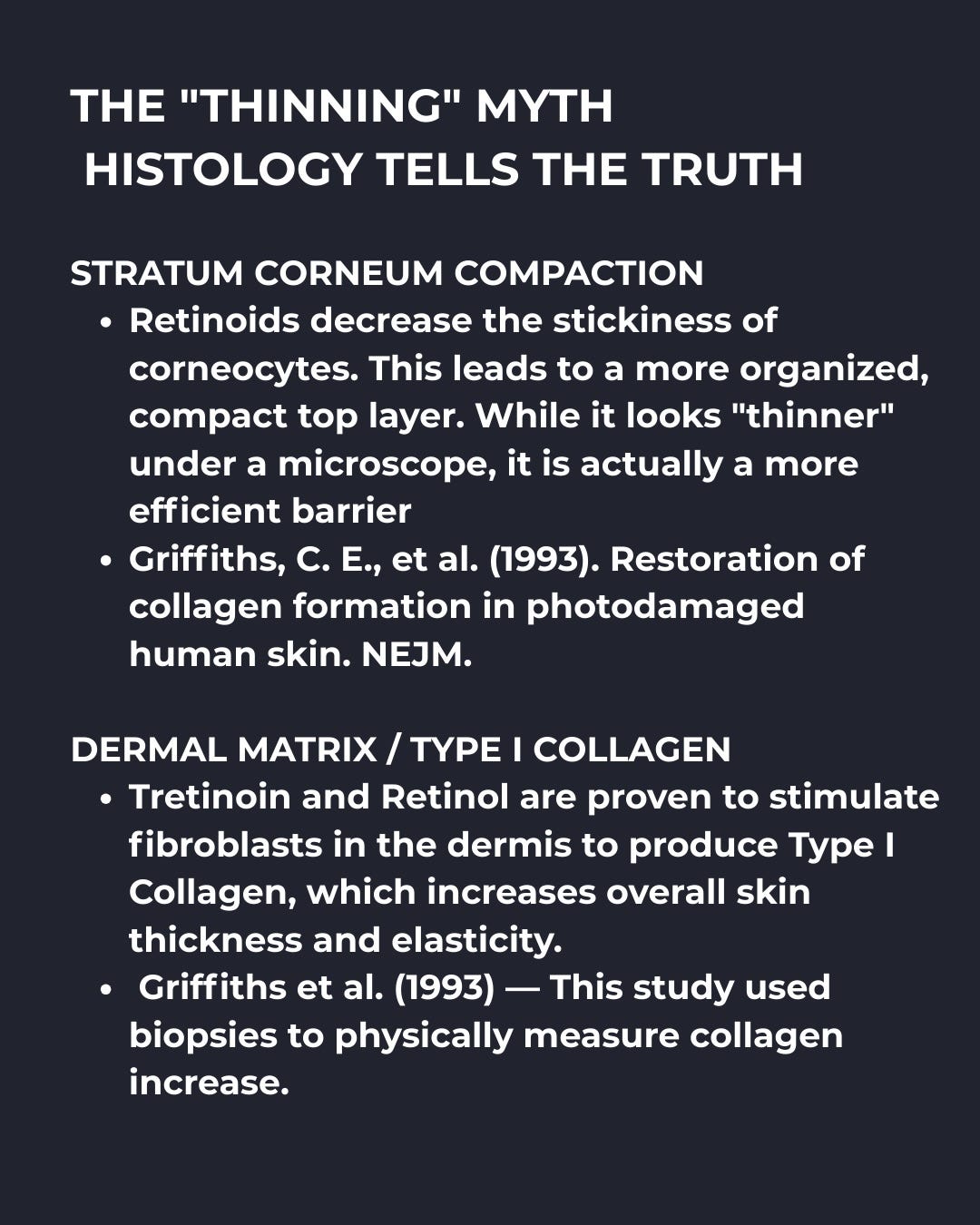
Histology: The “thinning” Myth
Stratum corneum compaction
Retinoids reduce corneocyte cohesion, creating a more organized, compact top layer that may look “thinner” microscopically but functions as a more efficient barrier.
Clinical histology studies show restoration and stimulation of collagen formation in photodamaged human skin with tretinoin/retinol use (Griffiths et al., NEJM 1993).
Dermal matrix / Type I collagen
Tretinoin and retinol stimulate dermal fibroblasts to produce Type I collagen.
Biopsy‑based studies demonstrate increased dermal thickness and elasticity after sustained use, not structural thinning.
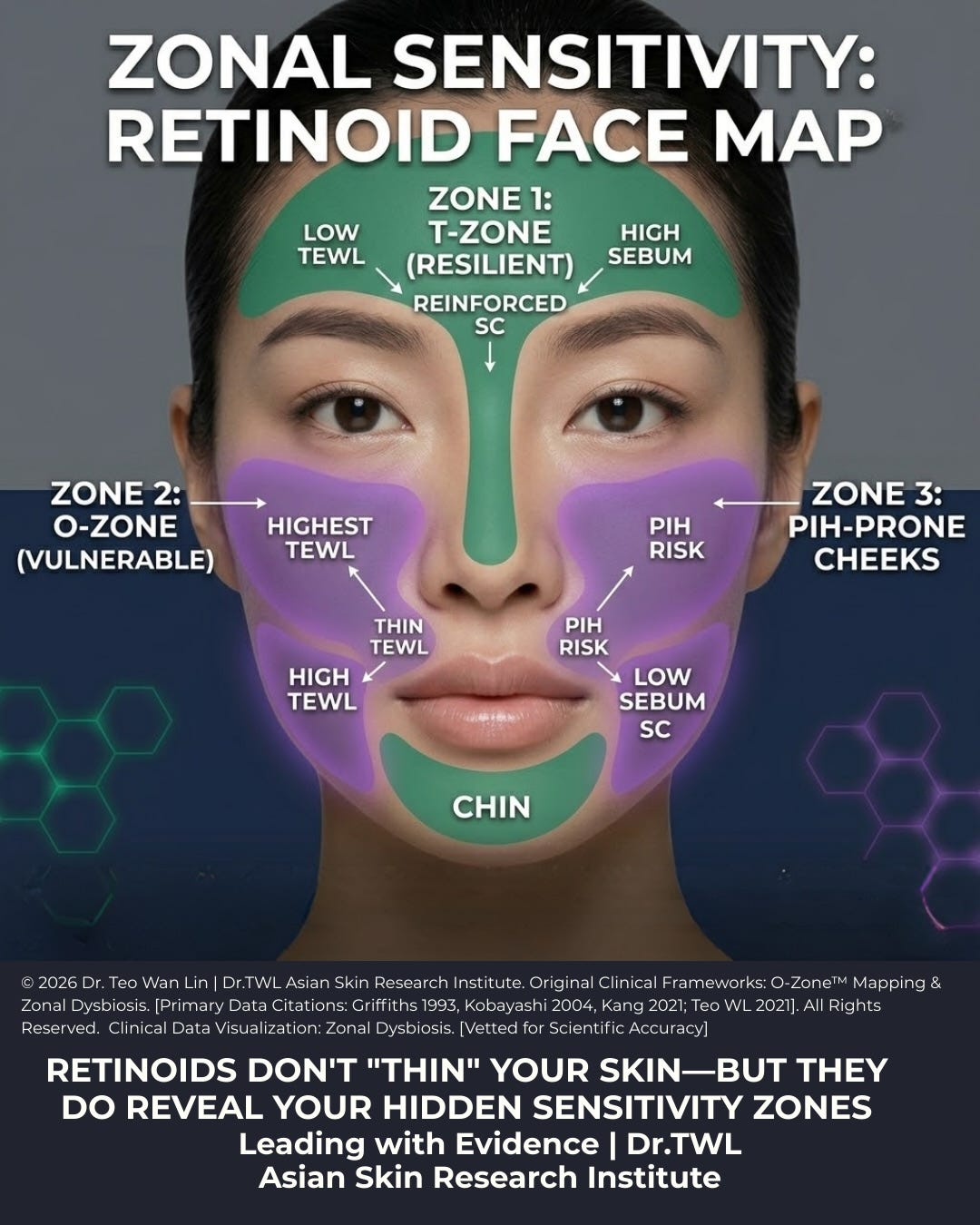
Anatomical Site Variation: O‑zone™ Vs T‑zone
Why standard protocols fail Asian skin
Most retinoid trials are based on Caucasian cohorts and treat the face as a uniform canvas.
Asian facial skin shows important biophysical differences by zone: barrier thickness, TEWL, sebum output, and PIH propensity.
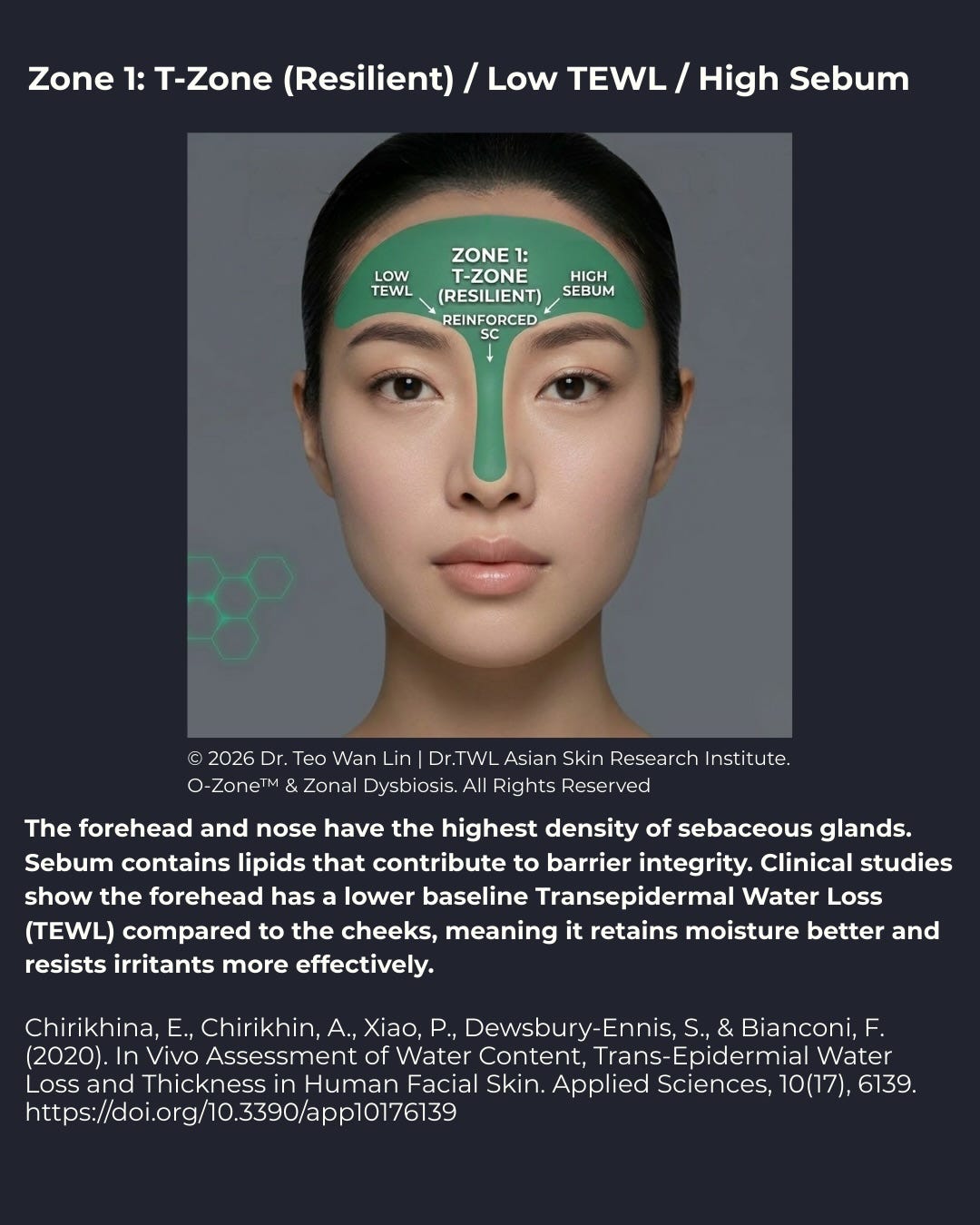
Zone 1 – T‑Zone (Resilient)
Forehead and nose have the highest density of sebaceous glands and higher sebum output.
Sebum‑rich zones show lower baseline TEWL versus the cheeks, meaning better moisture retention and greater resilience to irritants.